menu
Menu
account_box
Categories
Contact
email Send us a message

Contact us

phone By phone

+33 (0)1 42 25 12 79
Tue.-Sat., from 10am to 6pm
+33 (0)6 60 62 61 90
Everyday from 9am to 7pm.

email by Email

Adress: contact@marcmaison.com

share Let's get social

Languages
And also...
My selection
(28 Objects)
My selection (28 Objects)

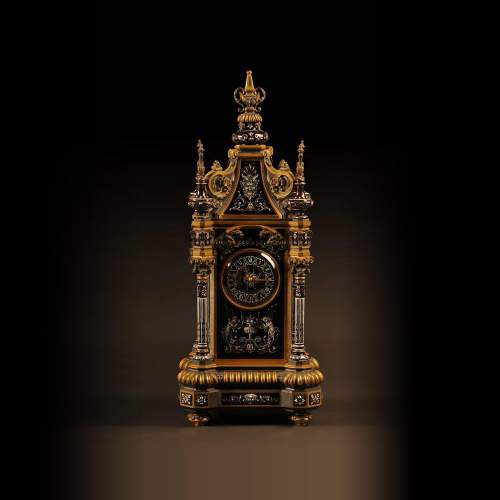
Paul SOYER, Bronze, Gilded Bronze and Enameled Clock, circa 1860

Ref.13949
Paul SOYER, Bronze, Gilded Bronze and Enameled Clock, circa 1860

This mantel clock is made in bronze and highly decorated with enamels painted in “grisaille”. Two patinas of bronze bring life and color to the frame, which - as was regularly the case for mid 19th century mantel clocks - is built like a miniature architectural Renaissance structure. The body has a square base, with columns on every corner that rise to composite order capitals, with a mixture of styles that is characteristic of 19th century art. The columns are linked together by gilded bronze round arches populated by Chimaera, mythological creatures. Above, the gilded bronzes are adorned with dark bronze ram heads, a motif borrowed from Antiquity and very popular in the 19th century, especially for furniture and decorative bronze pieces. Enamel is everywhere, painted in grisaille and enhanced with gold, displaying a lush decor of foliage, grotesques and curlicue. Below the clock face, two tapered putti flank a vase brimming with fruit. The sides are adorned with full length portraits of a gentleman and a lady. The man is dressed in the style of the characters in Rembrandt’s The Night Watch, painted in 1642. The lady plays a mandolin, which was imported to France from Italy in the 15th century. The Musée d’Orsay in Paris has recently acquired from Paul Soyer’s descendants an almost identical mantel clock to the one presented here. (OAO 1787) According to museum sources, this clock was presented at the World’s Fair in Philadelphia in 1876. Born in the Seine-et-Marne region, Paul Soyer began his carreer as a chisel artist, in Paris, in the 1850’s. He progressively learned the art of enameling and opened his own studio in 1861, rue Mauconseil between the Halles and Bonne-Nouvelle neighborhoods. He collaborated with well know artists like Claudius Popelin, Charles Duron and Gustace Baugrand. Working with the latter, he was awarded a bronze medal at the World’s fair in 1867. He then opened a larger workshop Rue Saint Sauveur and specialized in different enamel techniques with a preference for painted enamels. His very varied production, went from small pieces for jewellery, enameled objects for goldsmiths, plates for cabinet makers, to large portraits. A follower of Popelin, he remained faithful to the art of the late Renaissance, with a preference for a polychrome enamel technique, which associated grisaille and gold camaïeu. He participated in all the French and Foreign World’s Fairs, to the Union Centrale de Beaux-Arts appliqués à l’Industrie exhibits. Often rewarded, particularly with a gold medal in 1878, he was considered beyond competition and member of the jury in 1889, when he received the Légion d’Honneur.

Dimensions:
Width: 27 cm
Height: 67 cm
Depth: 23 cm

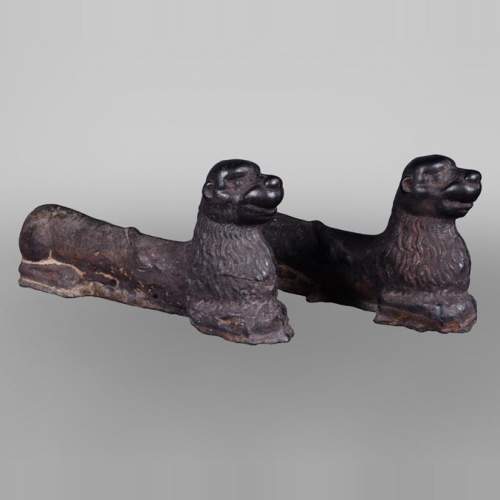
Rare pair of cast iron andirons shaped as a laying dog, Wallonia, 16th century

Ref.12745
Rare pair of cast iron andirons shaped as a laying dog, Wallonia, 16th century

Product of the popular figurative art of Wallonia, this pair of andirons made in the 16th century in cast iron shows a naive beauty but is also a testimony of some kind of aesthetic concerns. Made in a zoomorphic shape, the Musée Gaumais, where a similar pair is preserved, describes them as a representation of laying dogs. However, our andirons shows distinctly the representation of hair all around the neck suggesting a mane. Furthermore the representation of the head can also lets us think that a lion is represented instead of a dog. The author of those andirons didn't only give a shape to their visible parts. Indeed the back shows as much precised details with the add of a relief scroll on each side, in which we can see a stylization of the back legs. Also, a small ornamental bolection was added on the andiron's body. It's a very certain inventive spirit, a dexterity but also a sensitivity that the popular art in Wallonia expresses through this pair of andirons. The Wallonia is a French speaking region of the Belgium's south. It is famous for its medieval cities and its Renaissance architecture. Nevertheless, we can't find a real stylistic unity in the region because of the neighbors variety and sometimes the different influences from the outside, without saying the individualism. In olden days, we could count simultaneously and on a very small area, subjects of the Liège Prince-Archbishop, Limbourg or Luxembourg Duke, Prince-Abbot of Stavelot-Malmedy, Namur or Hainaut Count, either independent or under the Burgundian, Spanish, Austrian or French tutelage. This historic past that has divided the actual Wallonia into divided political territories, sometimes rivals, can also explains this dispersal.

Dimensions:
Width: 8 cm
Height: 18 cm
Depth: 43 cm

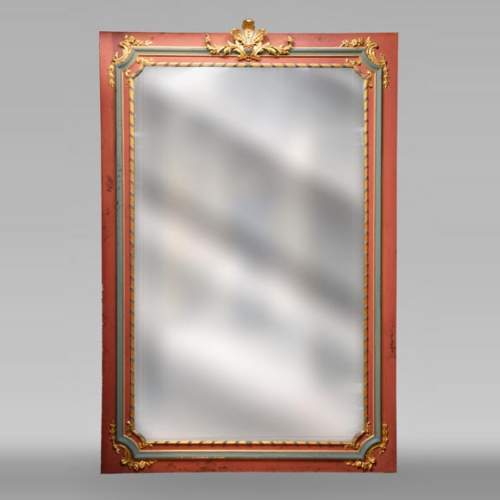
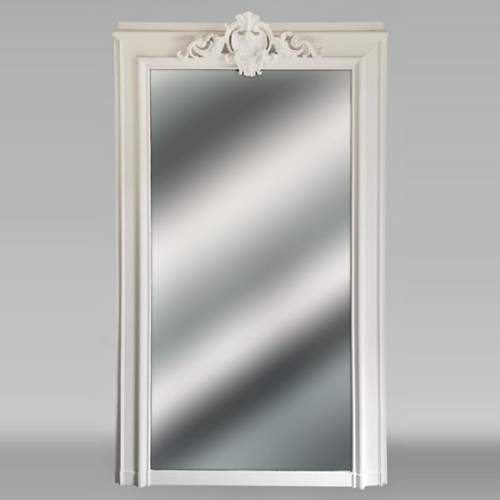
Trumeau in stucco and painted wood in the Regence style

Dimensions:
Width: 95 cm
Height: 163 cm
Depth: 15 cm

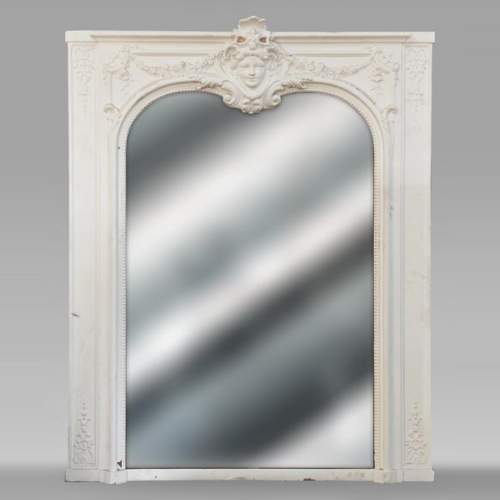
Napoleon III style trumeau surmounted by a woman's mask

Dimensions:
Width: 130 cm
Height: 162 cm
Depth: 13 cm

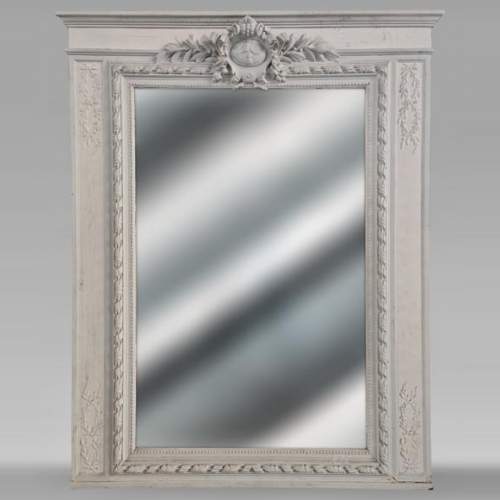
Louis XVI style trumeau with scrolled acanthus leaves

Dimensions:
Width: 141 cm
Height: 174 cm
Depth: 13 cm

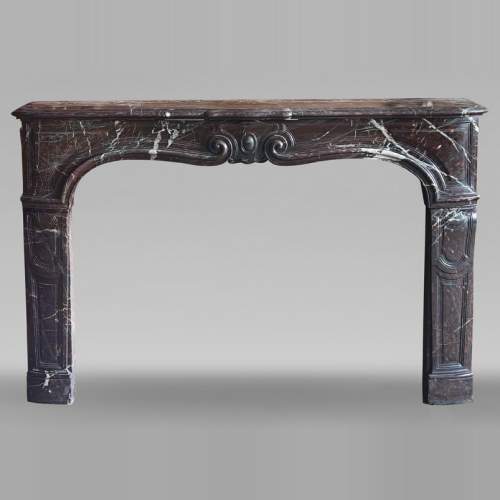
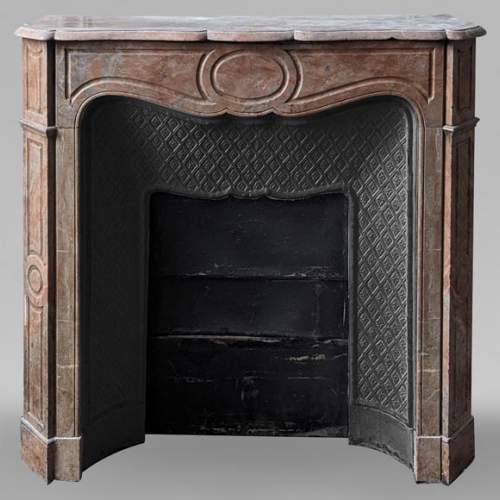
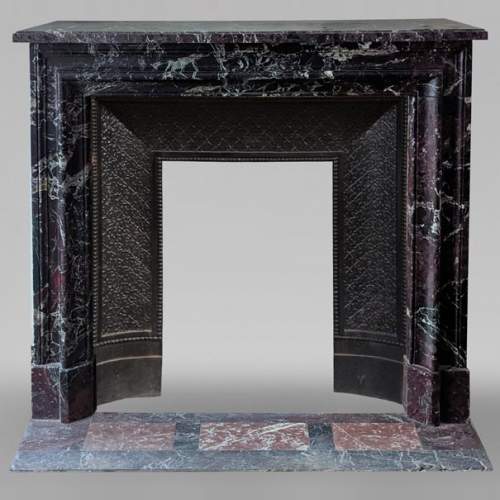
Louis XV period fireplace with molded entablature, in Campan marble

Dimensions:
Width: 137 cm
Height: 115 cm
Inner width: 137 cm
Inner height: 93 cm

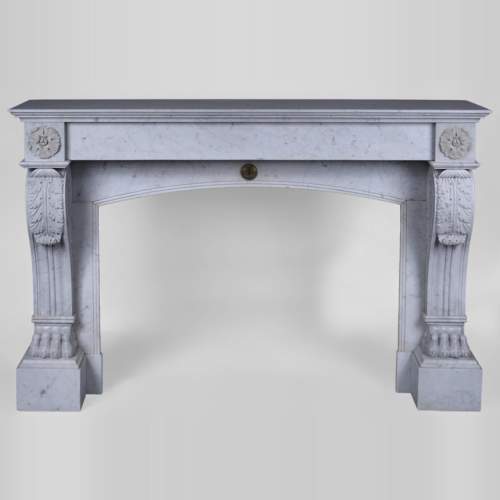
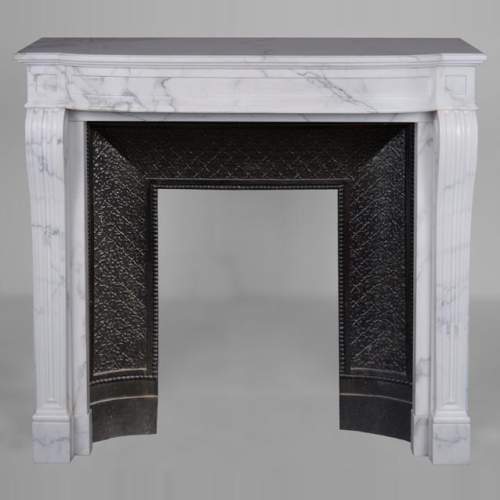
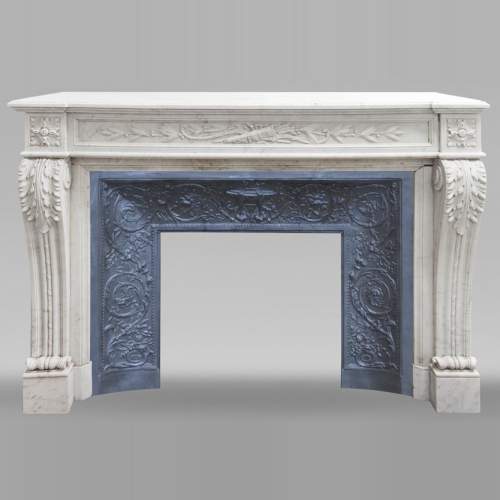
Louis XVI style fireplace with acanthus leaves, in Carrara marble

Dimensions:
Width: 156 cm
Height: 110 cm
Inner width: 111 cm
Inner height: 83 cm

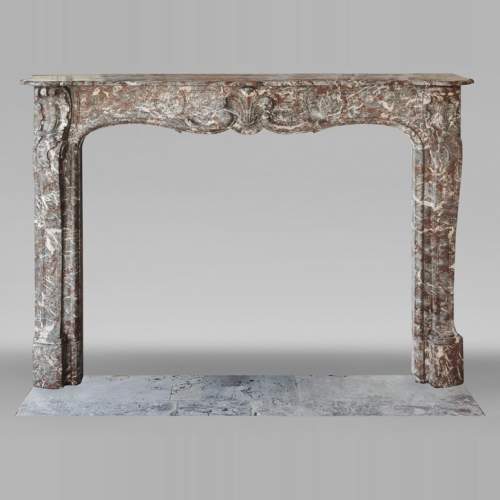
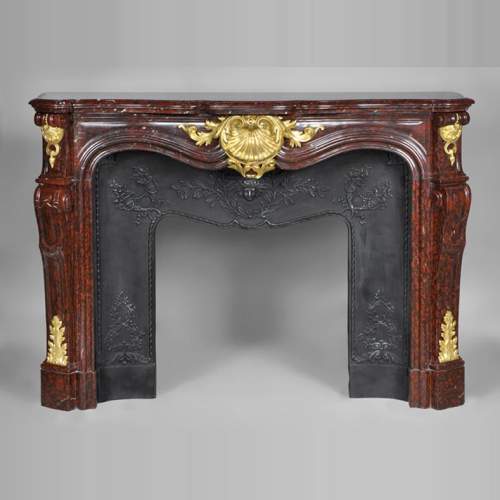
Louis XV period fireplace in Royal Red, decorated with a palmette

Dimensions:
Width: 188 cm
Height: 130 cm
Depth: 60 cm
Inner width: 137 cm
Inner height: 111 cm

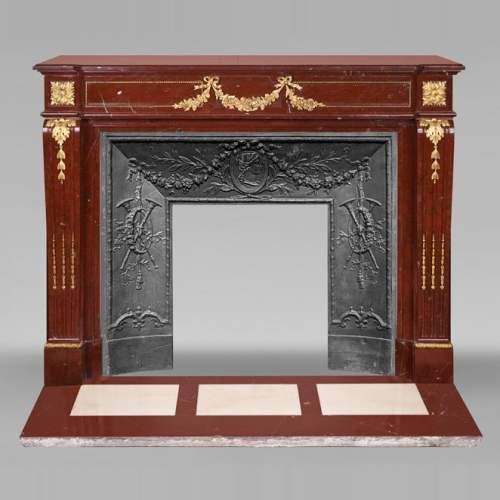
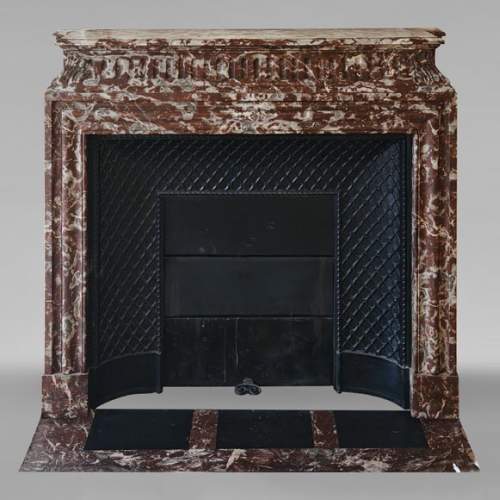
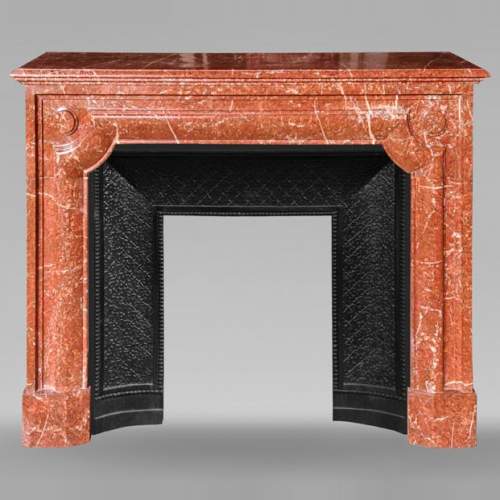
 Louis XVI period fireplace in red northern marble, slightly curved

Dimensions:
Width: 163 cm
Height: 103 cm
Depth: 64 cm
Inner width: 128 cm
Inner height: 84 cm

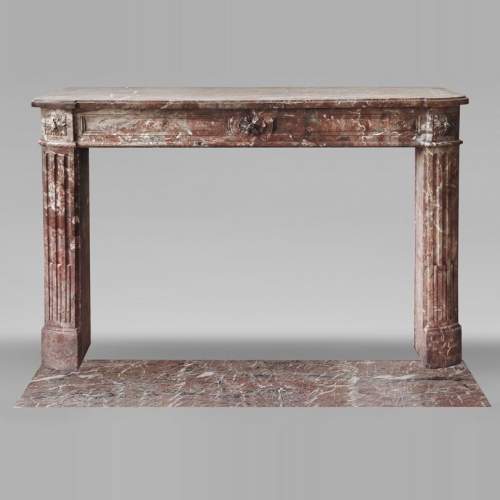
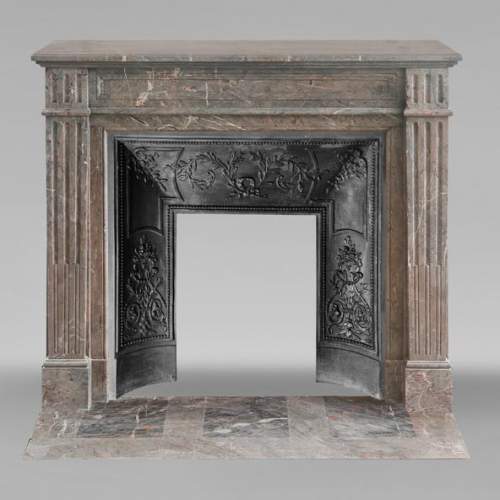
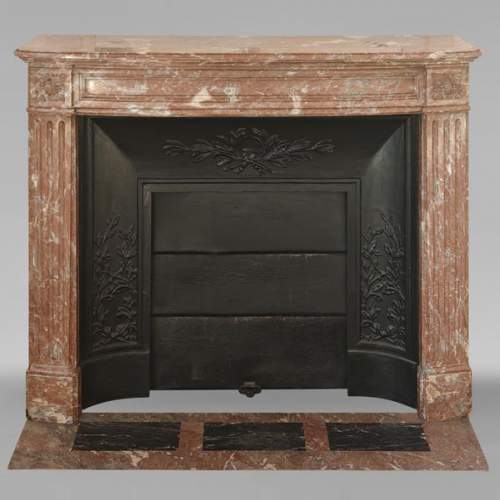
Louis XVI style fireplace with fluted feet in Enjugerais marble

Dimensions:
Width: 130 cm
Height: 110 cm
Depth: 36 cm
Inner width: 87 cm
Inner height: 85 cm

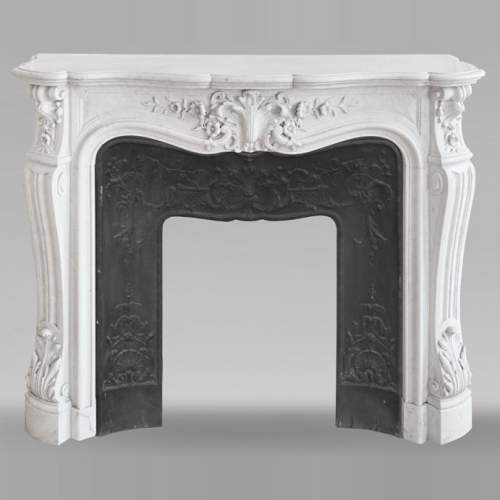
Louis XV style fireplace in Carrara marble, with richly sculpted floral decoration

Dimensions:
Width: 136 cm
Height: 107 cm
Depth: 42 cm
Inner width: 89 cm
Inner height: 88 cm