menu
Menu
account_box
Categories
Contact
email Send us a message

Contact

phone By phone

+33 (0)1 42 25 12 79
Tue.-Sat., from 10am to 6pm
+33 (0)6 60 62 61 90
Everyday from 9am to 7pm.

email by Email

Adress: contact@marcmaison.com

share Let's get social

Languages
And also...
My selection
(20 Objects)

My selection (20 Objects)


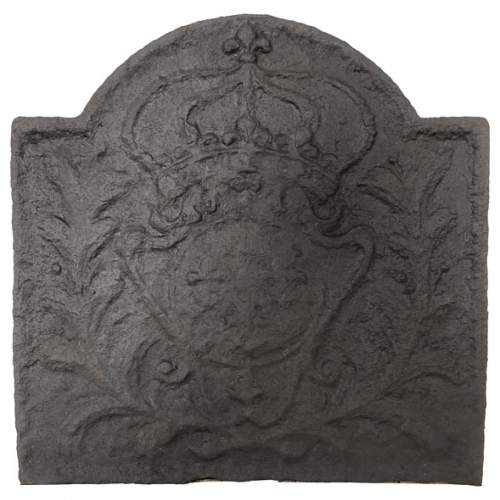
Antique cast iron fireback with coat of arms of Pénancoët de Kéroualle

Ref.11262
Antique cast iron fireback with coat of arms of Pénancoët de Kéroualle

This antique cast iron fireback, made after 1684, is decorated with the arms of Louise-Renée de Penancoët of Kéroualle, Baroness of Petersfield, Countess of Fareham, Duchess of Portsmouth. Two greyhounds flank a diamond ""fess argent and six coins azure"" topped with a ducal crown. The point of the diamond rests on a mascaron representing a bearded man wearing a crown among curlicue foliage. The carving illustrates a delicate and vigorous craftsmanship. The high relief of the sculpture, the manner in which the tails of the hounds and the volutes of foliage overflow their rightful frame, make for a very lively composition. Louis-Renée (1629-1734) was the mistress of Charles II of England for some 15 years and was equally a secret agent for King Louis XIV of France. Saint-Evremond said of her “the silk ribbon that she wore at her waist united France and England”. Born in Brittany she lived a simple life in the family Château of Kéroual en Guilders. Noticed by the Duke of Beaufort, grand master of navigation, who courted her in vain but promised to get her an appointment as lady-in-waiting to the Duchess of Orleans, the sister in law of King Louis XIV. He kept his promise post-mortem. Indeed in 1668, Louise Renée arrived in Versailles to serve Madame who was also the sister of Charles II of England. Louis XIV saw Louise Renée as a useful diplomatic asset. She set off to England as lady-in-waiting to Madame who was visiting her brother. Charles II had little sympathy for France and even less so for its King, but he loved women, of which Louis XIV was fully aware. The reception in Dover in honor of Madame was extravagant and Louise Renée attracted the eye of Charles II. The Treaty of Dover linked the two kingdoms: Charles II officially converted to Catholicism and receives the sum of two million crowns from Louis XIV. Both Kings would declare war on the United provinces and share the conquered provinces. Madame offered a jewel to her brother to thank him for his gifts and Louise-Renée was the messenger; as she handed him the gift, the King took her hand and is said to have declared : “This is the only real jewel I desire.” Upon her arrival in Versailles, Louis XIV sent her directly back to London where she was expected. She lived in a huge apartment in the palace of Whitehall where the King visited her every evening. She was officially made Lady-in-waiting to the Queen of England in 1671. In 1672 she gave birth to Charles Lennox, duke of Richmond and was granted an annuity of 138 000 pounds, the titles of Duchess of Fareham, Baroness of Petersfield and Duchess of Portsmouth. Her influence lasted 15 years until the death of the King in 1685. In 1684, on the request of Charles II, Louis XIV made her Duchess of Aubigny and Peer of France. This same year she acquired the Château of Trémazan (Finistère) which she linked to the lands of Kéroual. Louis-Renée died in Paris, rue des Saints Pères on November 14th 1734, having lost most of her fortune. Two similar models are preserved in the Musée d'Orléans and in the Musée du Berry in Bourges.

Dimensions:
Width: 85 cm
Height: 86 cm

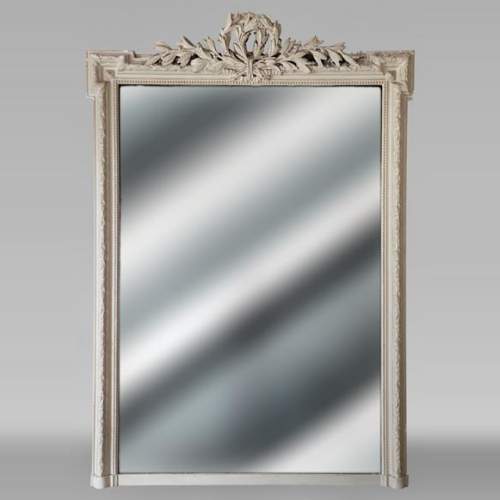
Louis XVI style gilded trumeau with pearl decoration

Dimensions:
Width: 129 cm
Height: 143 cm
Depth: 6 cm

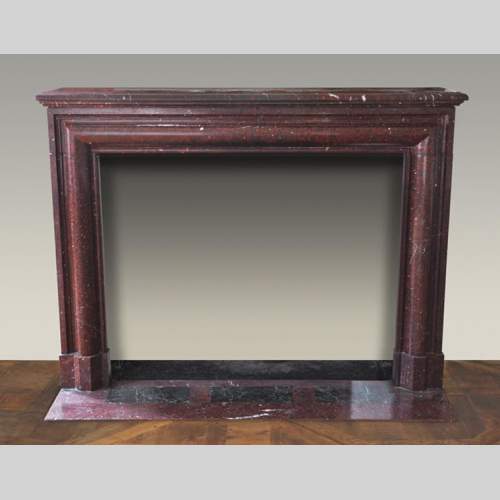
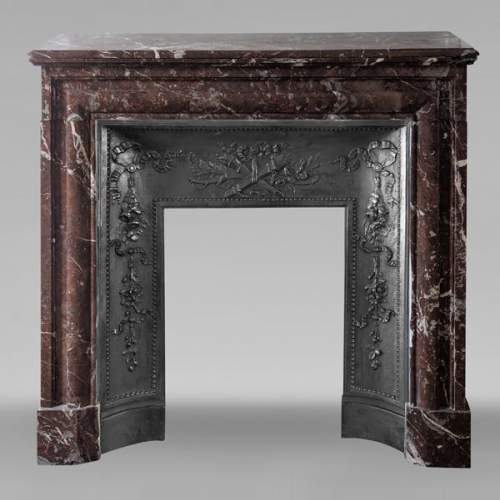
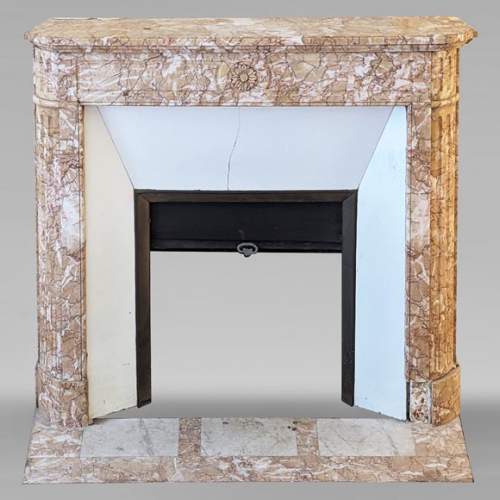
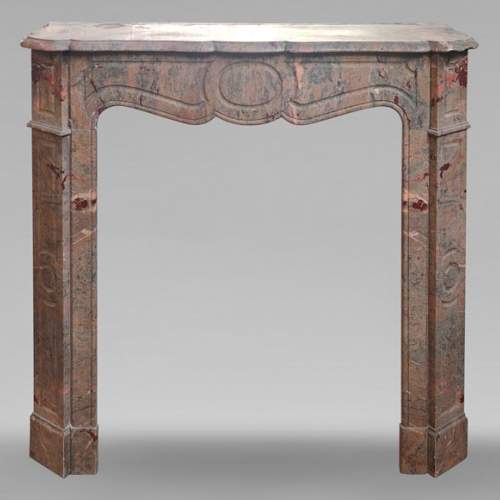
Napoleon III style mantel with modillions in Rouge du Nord marble

Dimensions:
Width: 105 cm
Height: 102 cm
Depth: 36 cm
Inner width: 68 cm
Inner height: 79 cm

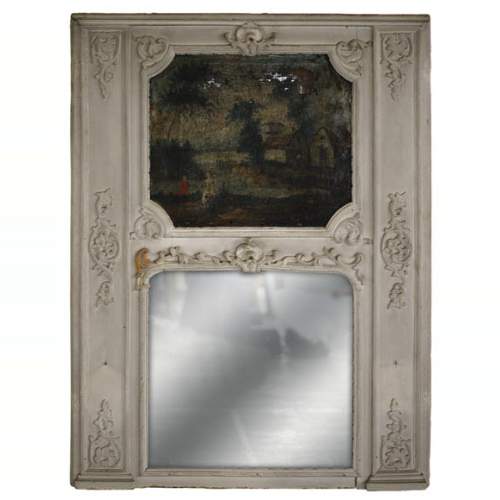
Louis XVI-style gilded trumeau with pearl decoration

Dimensions:
Width: 121 cm
Height: 181 cm
Depth: 4 cm

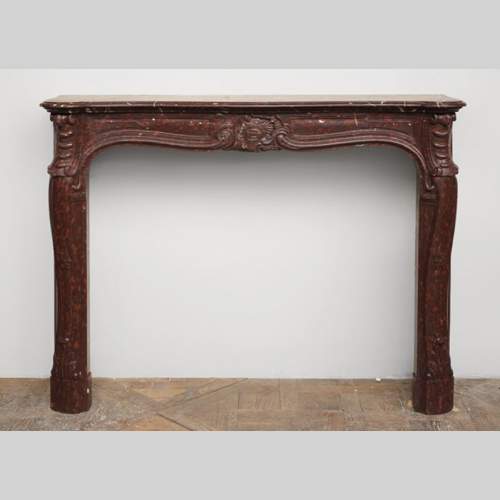
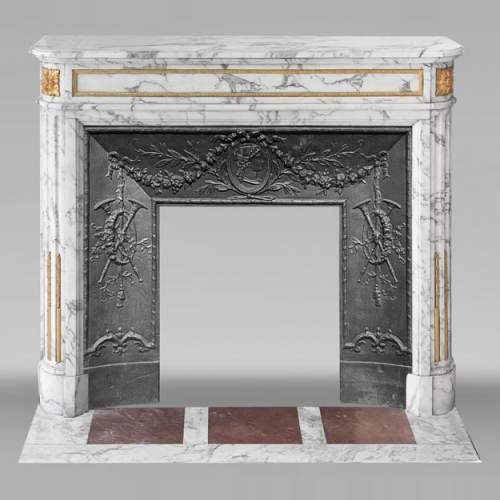
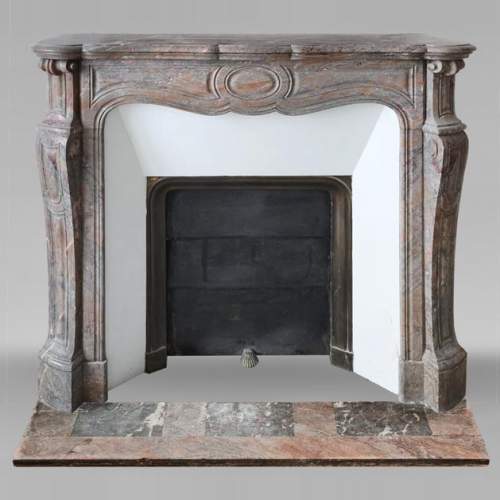
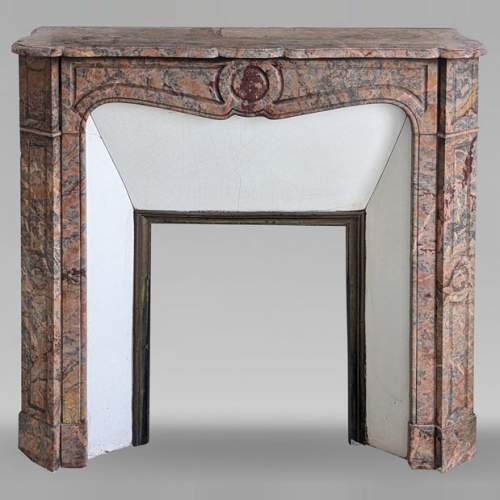
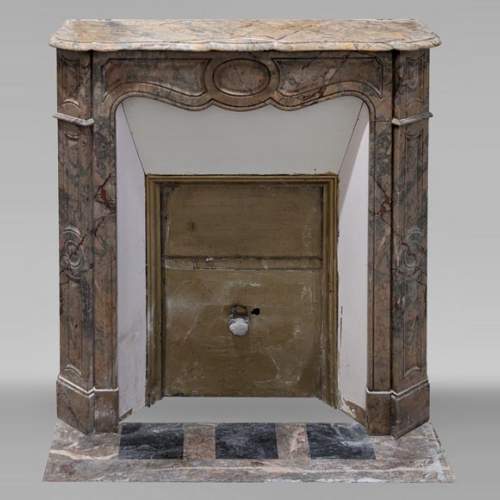
Louis XV style Pompadour mantel in Enjugerais marble

Dimensions:
Width: 112 cm
Height: 102 cm
Depth: 35 cm
Inner width: 78 cm
Inner height: 88 cm

Napoleon III style mantelpiece in Statuario Carrara marble, with mantel top including a clock

Ref.5324
Napoleon III style mantelpiece in Statuario Carrara marble, with mantel top including a clock

This Napoleon III style mantelpiece was made in Statuary marble in the 19th century. It includes many Renaissance inspired elements. It features an imposing mantel top, also in marble. It is crowned by a semi-circular pediment adorned with two intertwined laurel branches. The pediment surmounts a rectangular cartouche carved with two cornucopias overflowing with flowers and linked by a ribbon in low-relief. A clock is set in the centre of the cartouche. The central element is framed on either side by two consoles, then by a promontory adorned with a frieze of posts. The promontory is topped by scrolls that visually link it it to the semi-circular pediment. The lintel of the fireplace is richly sculpted. It is organised around a winged shell. The lintel is punctuated on either side by alternating metopes and triglyphs. The triglyphs are carved with fish scales and each surmounted by a small scroll, while the metopes are adorned with various motifs: at either end, a bouquet of acanthus leaves; and towards the centre, letters, a B and a C, intertwined with leaves. The jambs are carved on two sides. Their upper end is adorned with a scroll surmounting a shell motif, below which runs a bundle; below this is a leafy cartouche adorned with a sunflower, with dangling tassels (seeming set in motion by a breath of air) and a stylised flower pattern. Just above the base, the jambs end in a lion’s paw. The interior part is adorned with a large moulding, the upper corners of which are decorated with acanthus leaves.

Dimensions:
Width: 162 cm
Height: 166 cm
Depth: 37 cm
Inner width: 91 cm
Inner height: 83 cm

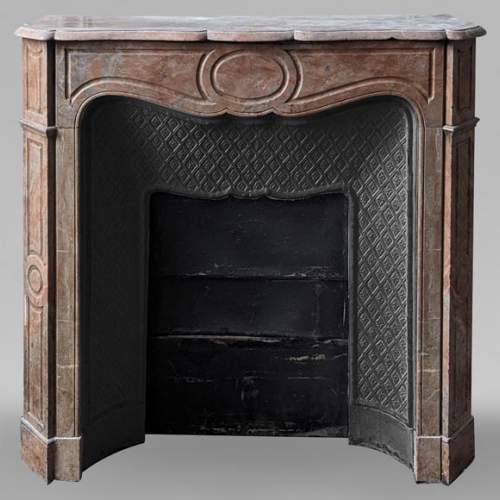
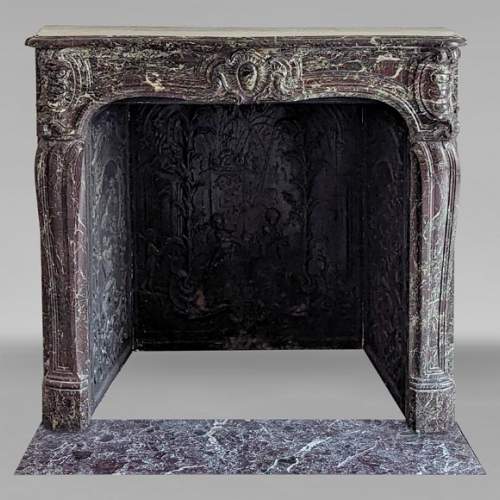
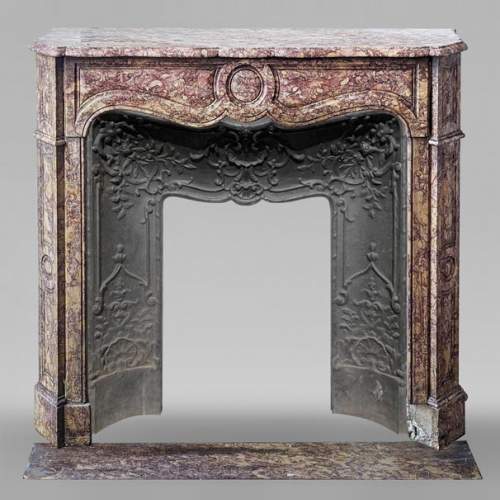
Louis XV style Pompadour mantel in Enjugerais marble

Dimensions:
Width: 114 cm
Height: 100 cm
Depth: 35 cm
Inner width: 77 cm
Inner height: 83 cm

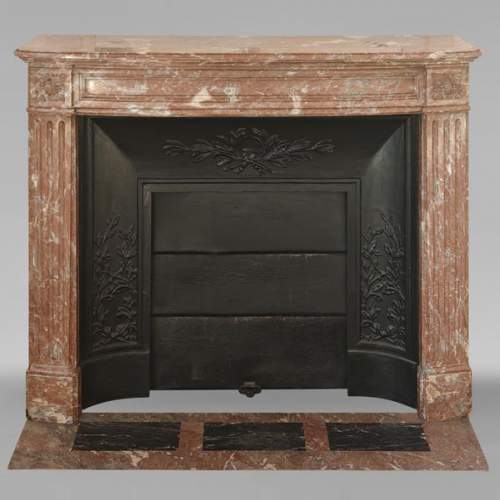
Louis XVI mantel in Turquin marble with curved flutes

Dimensions:
Width: 145 cm
Height: 108 cm
Depth: 37 cm
Inner width: 104 cm
Inner height: 82 cm

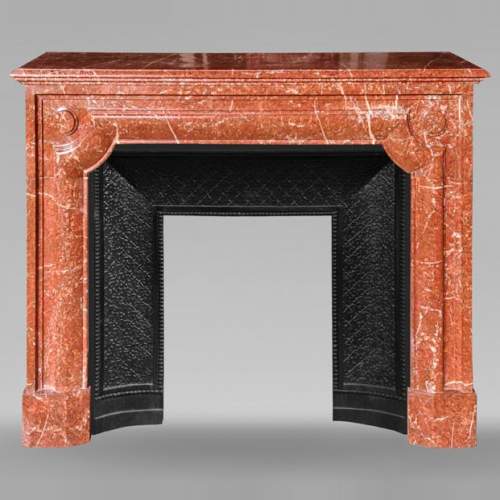
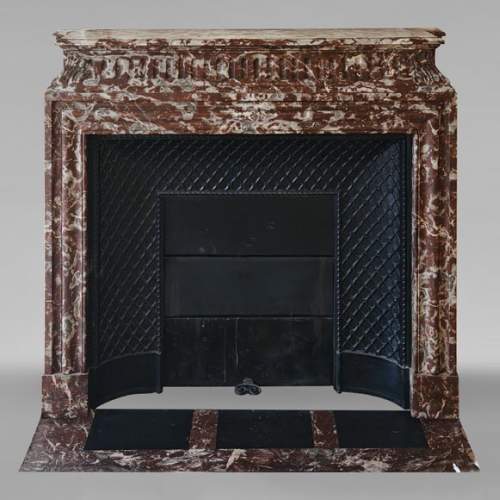
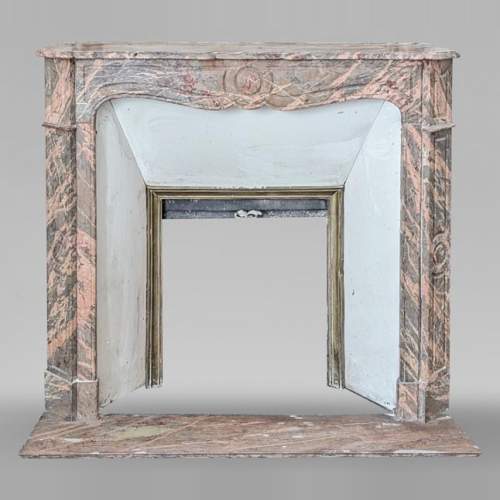
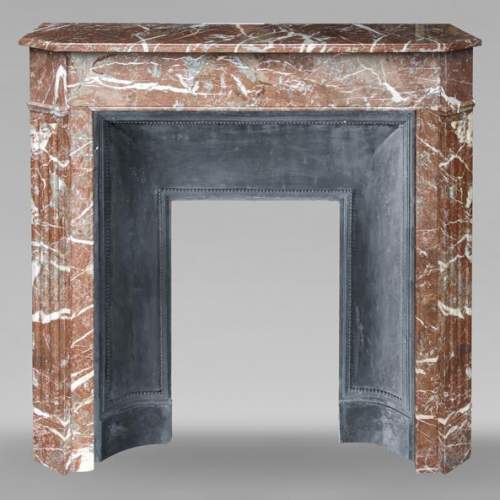
Louis XVI style mantel in Rouge du Nord marble

Dimensions:
Width: 106 cm
Height: 100 cm
Depth: 30 cm
Inner width: 65 cm
Inner height: 80 cm

Regency style Trumeau in the shape of a crossbow

Dimensions:
Width: 116 cm
Height: 161 cm
Depth: 7 cm

Jacques Louis KESSLER, Pair of Vases Engraved with Greek Revival Decor Using the “Kessler” Process, mid-19th century

Ref.15609
Jacques Louis KESSLER, Pair of Vases Engraved with Greek Revival Decor Using the “Kessler” Process, mid-19th century

This pair of vases, crafted in the 19th century, was made using a technique developed by engineer Jacques Louis Kessler in 1855 and patented in 1858. The decoration of these two vases, made of double-layered crystal (blue on the outside and transparent on the inside), was achieved using Kessler’s engraving process. This innovative method utilized alkaline fluorides mixed with acids and a system of stencils, allowing for an immediate contrast between a bright, colored design and a matt background. The Baccarat crystal manufacturer later acquired exclusive rights to this patented process, which brought them widespread acclaim during the 1867 Paris Exhibition. These baluster-shaped vases feature neo-Greek ornamentation, alternating between blue-toned designs and matt crystal. Their clean, elegant lines are accented by several ornamental blue crystal bands. The decoration is composed of three primary scenes: the first depicts two combatants. The second portrays a winged Victory holding a palm in one hand while crowning a resting warrior with laurel in the other; the warrior stands before her. The third depicts three figures: a woman playing the lyre for a king holding a long scepter, with a young ephebe standing behind him. The scenes are separated by depictions of weapon trophies. The iconography draws inspiration from scenes commonly found on ancient Greek vases, while emphasizing the fluidity of the figures’ movements and features. Each vase rests on a circular mount supported by four spheres, with one vase bearing the number “2” engraved under its base. When Baccarat acquired the rights to Kessler’s technique, the company used it to create similar pieces, incorporating this innovative method into its repertoire. At the 1867 Paris Exhibition, Baccarat showcased a celestial blue crystal punch bowl and matching glasses engraved using this process; this set is now housed at the Corning Museum of Glass. The Galerie Marc Maison also presents an elegant neo-Greek vase made using the same technique (reference 15013). Due to Baccarat’s early acquisition of Kessler’s patent, vases like ours remain rare examples of the exceptional quality of pieces produced before the patent transfer, representing some of the earliest works created using Kessler’s revolutionary innovation.

Dimensions:
Height: 32 cm

Louis XV style fireplace in Carrara marble with plant decoration

Dimensions:
Width: 155 cm
Height: 105 cm
Inner width: 119 cm
Inner height: 89 cm