menu
Menu
account_box
Categories
Contact
email Send us a message

Contact us

phone By phone

+33 (0)1 42 25 12 79
Tue.-Sat., from 10am to 6pm
+33 (0)6 60 62 61 90
Everyday from 9am to 7pm.

email by Email

Adress: contact@marcmaison.com

share Let's get social

Languages
And also...
My selection
(21 Objects)
My selection (21 Objects)

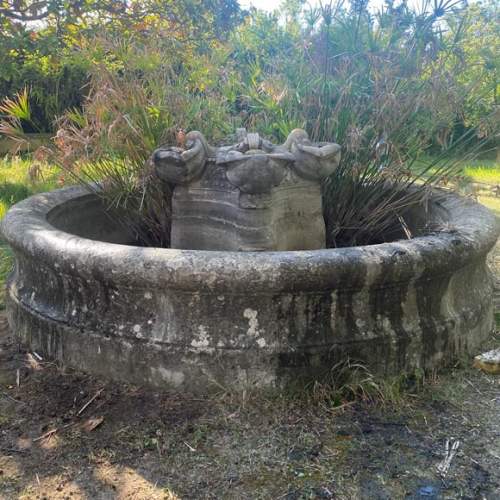
Fountain center model "Fontana delle Tartarughe", XIX century

Ref.14654
Fountain center model "Fontana delle Tartarughe", XIX century

Fountain named after Pope Alexander VII, featuring at its center a triton surrounded at its feet by four basins representing seashells, resting on a base. On the latter, a dedication is inscribed, divided into four cartouches surrounded by motifs, placed between each basin. The triton is depicted kneeling, the body turned to the left, his left arm raised upwards, his right arm in the same position, the palm open to the sky. This posture suggests that originally he was supposed to hold an element in his two hands (a large bowl, perhaps?) adding another level to the fountain. On the pedestal, cartouches bear inscriptions in Latin, the translation of which can be provided as: "ANNO PONTIFIC IV ALEXANDER VII RESTAURAUIT ORNAVITQUE," which can be translated as: "In the 4th year of the pontificate, Alexander VII restored and adorned." Alexander VII (1599-1667) was Pope from 1655 until his death in 1667. The model of the fountain (the base) as well as the text inscribed in the cartouches closely resemble the Turtle Fountain in Rome, located in Piazza Mattei, the design of which was drawn by Giacomo della Porta in 1582, and the bronzes executed by Tadeo Landini, the whole completed in 1585. The figures were originally supposed to hold dolphins in their hands, but these were never placed on the fountain due to water pressure. In 1658, during the pontificate of Alexander VII, the existing fountain was restored and transformed, with the addition of turtles, which are believed to have been sculpted by Bernini. Bibliography : Steven Ostrow, "Collecting Copies of 'the most charming fountain in Rome'. Taddeo Landini's Fontana delle Tartarughe".

Dimensions:
Width: 107 cm
Height: 60 cm
Depth: 107 cm

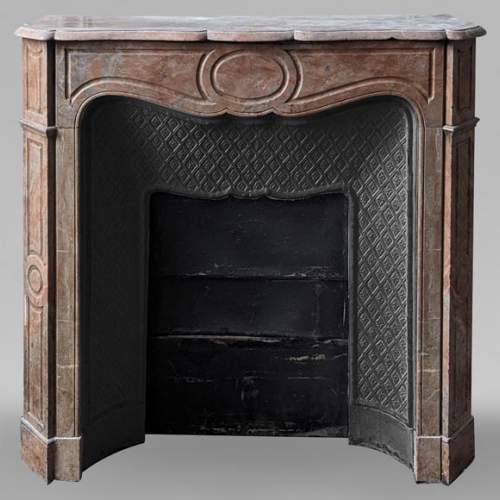
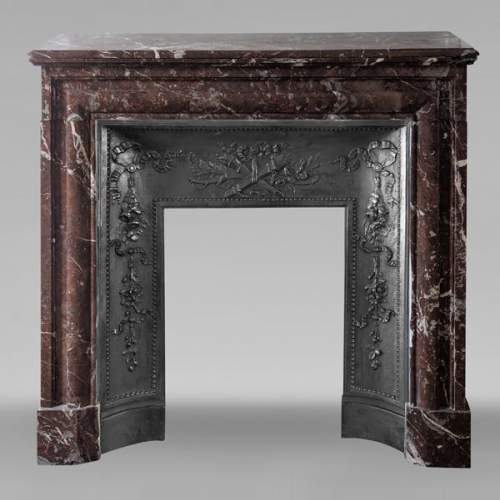
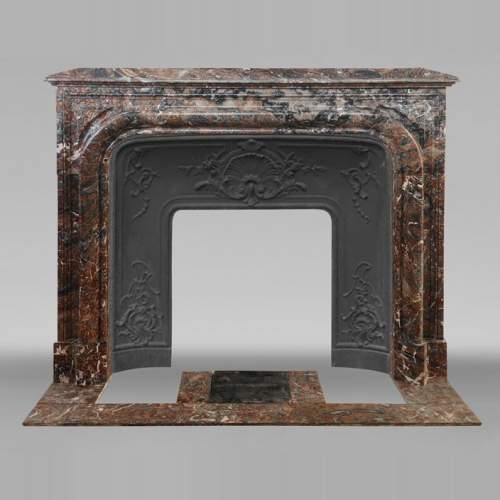
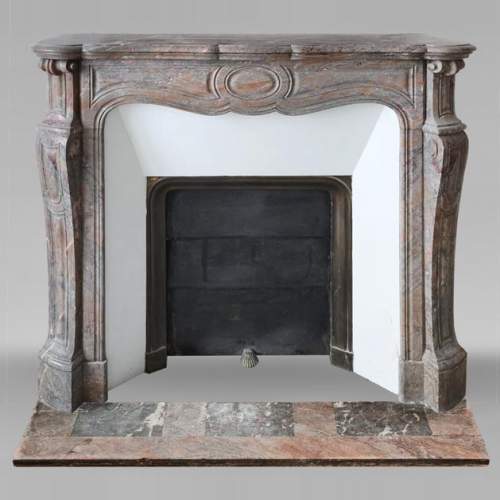
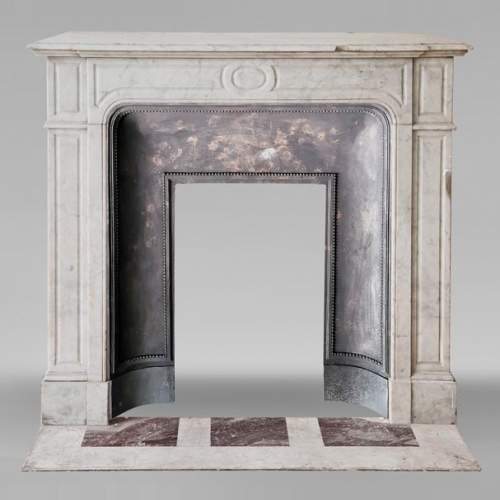
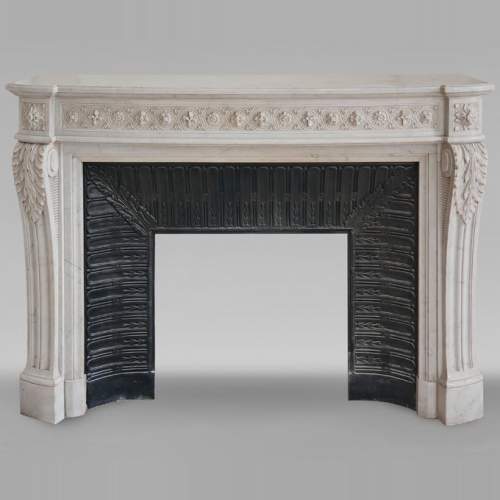
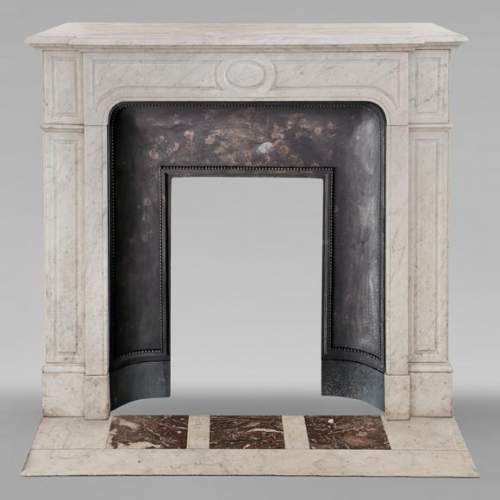
Louis XV style Pompadour mantel in Enjugerais marble

Dimensions:
Width: 112 cm
Height: 102 cm
Depth: 35 cm
Inner width: 78 cm
Inner height: 88 cm

Joseph Simon Volmar (Berne, 1796-1865), Pair of bears in cast iron

Ref.14989
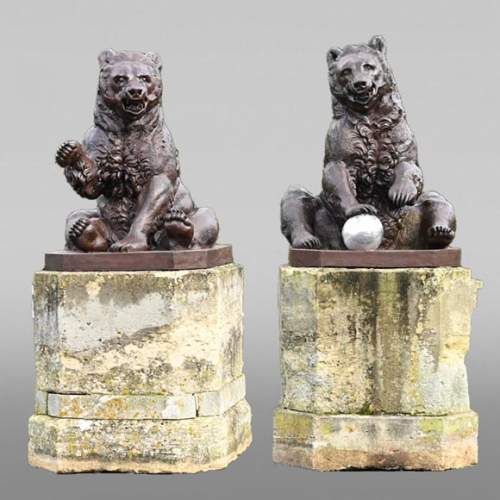
Joseph Simon Volmar (Berne, 1796-1865), Pair of bears in cast iron

Joseph Simon Volmar (or Vollmar) (Bern, 1796-1865) was a Swiss painter and sculptor. Born to a painter father, he was his student at the Bern Art School and later studied in Paris between 1814 and 1824 under Horace Vernet, Théodore Géricault, and the sculptor David d’Angers. In 1836, he was appointed Extraordinary Professor of Academic Drawing and Oil Painting at the Bern Art School. His reputation extended beyond Swiss borders. Volmar was known for his historical, landscape, and animal paintings and sculptures. During the 19th century, an era marked by the emergence of national consciousness, he secured a significant public commission for the monument to Rudolf von Erlach (c. 1299-1360), the victor of the Battle of Laupen in 1339, which preserved the independence of the city of Bern on that occasion. The architect Gottlieb Debler, the caster Rüetschi von Aarau (for the equestrian statue), and the Bisontine foundry Gandillot et Roy (for the bears) collaborated with Joseph Volmar in the construction of the monument between 1841 and 1848. Its inauguration took place during the Laupenfest in 1849, and the monument is now located on the Grabenpromenade. The presence of bears serves as a reminder of the historical identity of the city. Two of the bears sculpted by Volmar were casted again through a private commission from the Marshal of Saxe, who likely admired the monument. Although the plate indicating their authorship and casting location is missing, a comparison with the monument allows us to attribute them to Volmar. These statues were likely cast in Besançon; since the Gandillot et Roy foundry was acquired by the Degoumois et Cie foundry in 1864, it is certain that the bears were cast before that date. The animals, with their varied poses, detailed fur, and great expressiveness, showcase the sculptor’s mastery of animal art. One, ferocious, bares its fangs and raises its paw as if to attack, while the other is more playful, with its ball and its almost smiling expression. In both cases, the sculptor paid great attention to the detailed representation of the animals’ fur. Volmar had the opportunity to observe bears since the city of Bern housed them, and his graphic work includes numerous representations of these animals. Thus, the bears created by Volmar for the monument to Rudolf von Erlach were so admirable that they served as models for a new casting intended for private use. To our knowledge, these bears are the only two examples that have been cast from the monument. Ours ENPublish at Calameo

Dimensions:
Width: 107 cm
Height: 224 cm
Depth: 121 cm

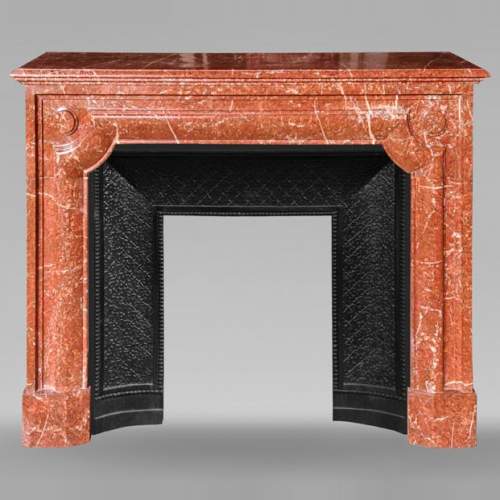
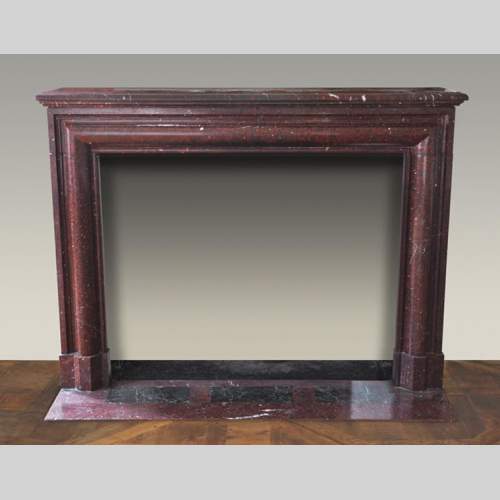
Louis XIV style mantel in Rouge du Nord marble

Dimensions:
Width: 115 cm
Height: 106 cm
Depth: 34 cm
Inner width: 81 cm
Inner height: 87 cm

Jacques Louis KESSLER, Pair of Vases Engraved with Greek Revival Decor Using the “Kessler” Process, mid-19th century

Ref.15609
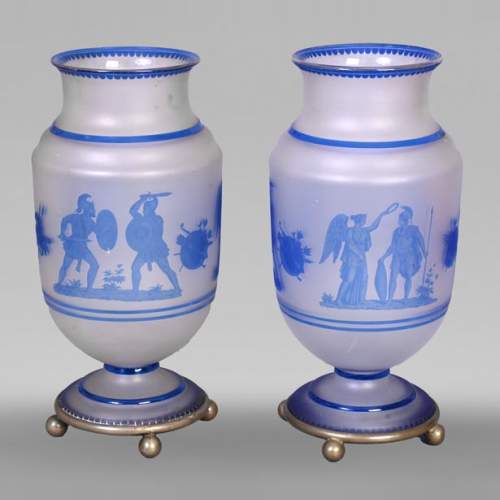
Jacques Louis KESSLER, Pair of Vases Engraved with Greek Revival Decor Using the “Kessler” Process, mid-19th century

This pair of vases, crafted in the 19th century, was made using a technique developed by engineer Jacques Louis Kessler in 1855 and patented in 1858. The decoration of these two vases, made of double-layered crystal (blue on the outside and transparent on the inside), was achieved using Kessler’s engraving process. This innovative method utilized alkaline fluorides mixed with acids and a system of stencils, allowing for an immediate contrast between a bright, colored design and a matt background. The Baccarat crystal manufacturer later acquired exclusive rights to this patented process, which brought them widespread acclaim during the 1867 Paris Exhibition. These baluster-shaped vases feature neo-Greek ornamentation, alternating between blue-toned designs and matt crystal. Their clean, elegant lines are accented by several ornamental blue crystal bands. The decoration is composed of three primary scenes: the first depicts two combatants. The second portrays a winged Victory holding a palm in one hand while crowning a resting warrior with laurel in the other; the warrior stands before her. The third depicts three figures: a woman playing the lyre for a king holding a long scepter, with a young ephebe standing behind him. The scenes are separated by depictions of weapon trophies. The iconography draws inspiration from scenes commonly found on ancient Greek vases, while emphasizing the fluidity of the figures’ movements and features. Each vase rests on a circular mount supported by four spheres, with one vase bearing the number “2” engraved under its base. When Baccarat acquired the rights to Kessler’s technique, the company used it to create similar pieces, incorporating this innovative method into its repertoire. At the 1867 Paris Exhibition, Baccarat showcased a celestial blue crystal punch bowl and matching glasses engraved using this process; this set is now housed at the Corning Museum of Glass. The Galerie Marc Maison also presents an elegant neo-Greek vase made using the same technique (reference 15013). Due to Baccarat’s early acquisition of Kessler’s patent, vases like ours remain rare examples of the exceptional quality of pieces produced before the patent transfer, representing some of the earliest works created using Kessler’s revolutionary innovation.

Dimensions:
Height: 32 cm

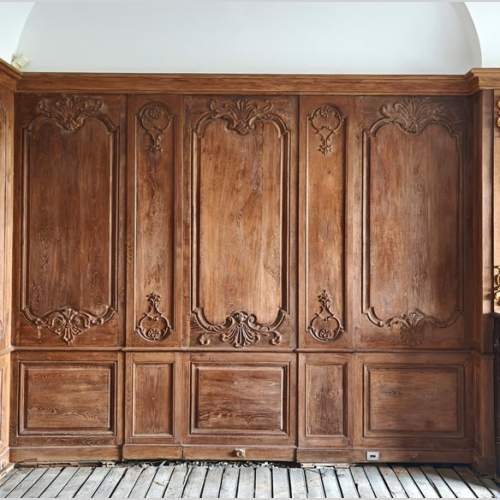
Louis XIV style boudin fireplace in Jourdan wood

Dimensions:
Width: 136 cm
Height: 108 cm
Depth: 38 cm
Inner width: 97 cm
Inner height: 87 cm

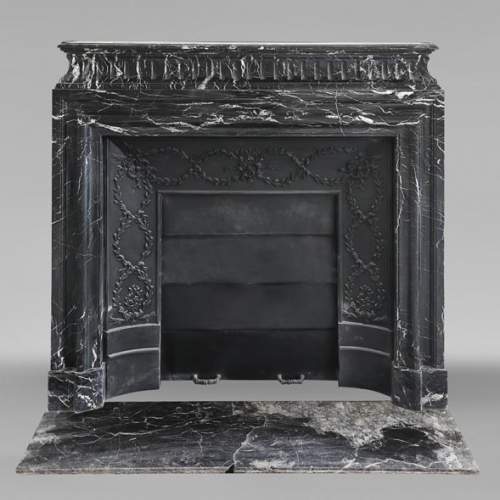
Louis XIV style fireplace with acroterion, in Marquina marble

Dimensions:
Width: 157 cm
Height: 140 cm
Depth: 33 cm
Inner width: 113 cm
Inner height: 104 cm

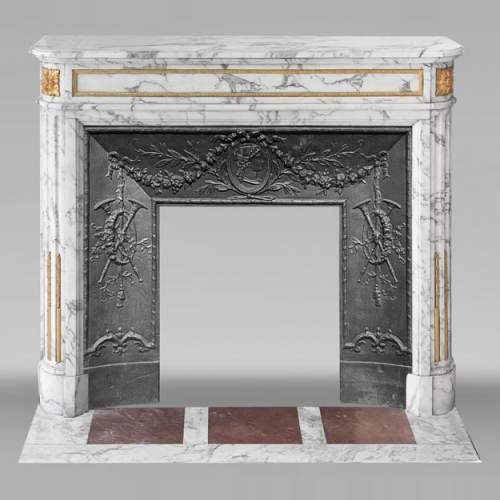
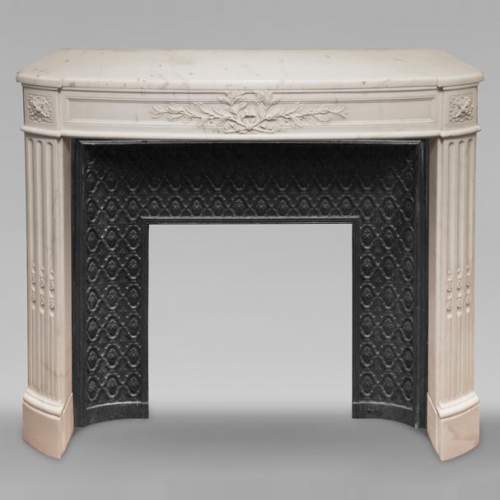
Louis XVI style fireplace in Arabescato marble, with bronze decoration

Dimensions:
Width: 135 cm
Height: 108 cm
Depth: 37 cm
Inner width: 99 cm
Inner height: 84 cm

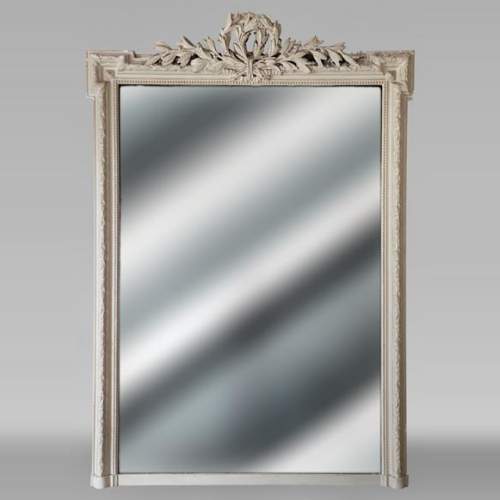
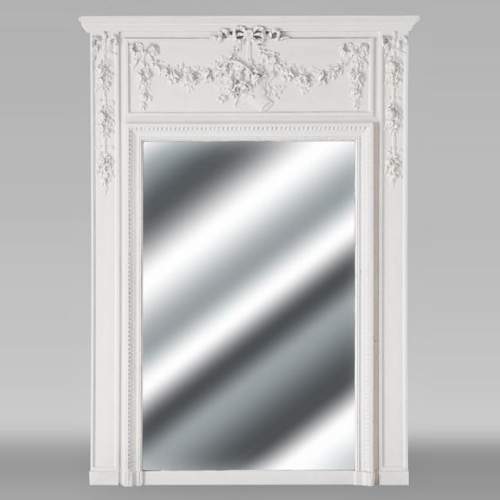
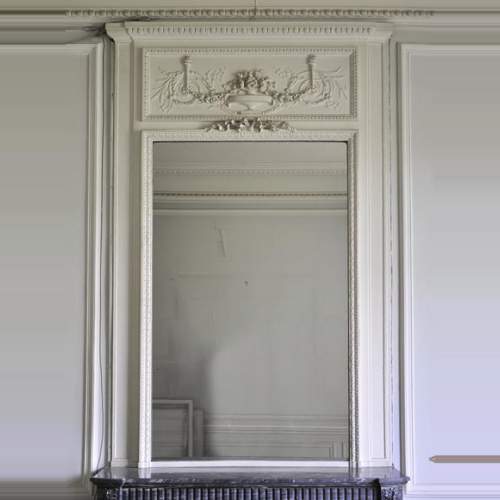
Louis XVI style trumeau decorated with a floral basket

Dimensions:
Width: 119 cm
Height: 175 cm
Depth: 8 cm

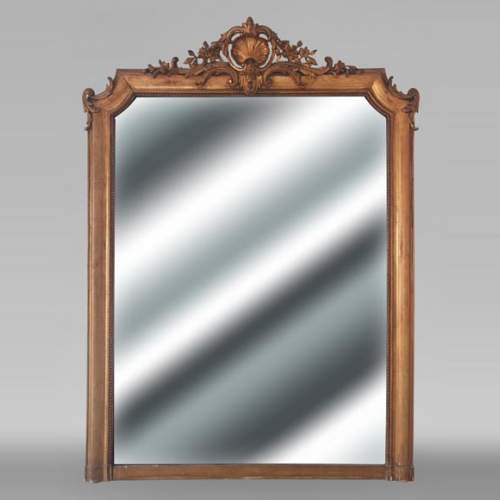
Gilt Louis XV style trumeau mirror surmounted by a shell motif

Dimensions:
Width: 116 cm
Height: 160 cm
Depth: 15 cm
Inner height: 146 cm