menu
Menu
account_box
Categories
Contact
email Send us a message

Contact

phone By phone

+33 (0)1 42 25 12 79
Tue.-Sat., from 10am to 6pm
+33 (0)6 60 62 61 90
Everyday from 9am to 7pm.

email by Email

Adress: contact@marcmaison.com

share Let's get social

Languages
And also...
My selection
(19 Objects)

My selection (19 Objects)


Léon MESSAGÉ (1842-1901) (att. to) -  Clock with Cupidon

Ref.15705
Léon MESSAGÉ (1842-1901) (att. to) - Clock with Cupidon

Gilded bronze, enameled face.  This exceptional Louis XV style clock is attributed to the sculptor and decorator, Leon Message, active in the last quarter of the nineteenth century. Made of gilded bronze, this piece adopts the forms of the eighteenth century. Indeed, the arabesques, and decorative vocabulary, are characteristic of the rococo style and of a Juste-Aurele Meissonier, leader of this movement. The clock stands on four winding feet, that suppor themselves on a shelf, in the style of Louis XV decorative clocks. The decorative motifs consist of an inverted shell, foliage and coils, are also specific to the rococo style through their asymmetric treatment, the abundance and decorative character somewhat extravagant. Moreover, the term 'rococo' means, originally, artificial caves, which contained imitations of shells. The abundance of curved lines and the relatively pronounced fantasy of the ensemble are from the eighteenth century. Similarly, the rockery used a lot of grotesques, which is well illustrated here by the presence of a mask of a bearded man crowned with laurel, beneath the clock face. From both sides of this grotesque are dolphins, a motif which one often finds in the works of Léon Messagé. The clock face is surrounded by garlands of leaves lined with flowers, which bloom in the upper part of the clock, giving birth to a small horn on which sits a Cupid, holding his bow in his left hand and wearing his quiver on his back. LÉON MESSAGÉ(March 8, 1842 - May 16, 1901?)Léon Messagé was born March 8, 1842 in Sens, Yonne. At 20 years old, he lived in Paris at 23 rue de Rivoli and was then referred to as 'stone carver.' Around 1885, he began collaborating with François Linke, important cabinetmaker of the Belle Epoque,  providing him models for furniture and ornamental bronzes. They collaborated until the death of Messagé, who lived until the age of 58 and died May, 16 1901. It is through this collaboration with François Linke, that Messagé would be successful during the last decades of the nineteenth century. In fact, Messagé was awarded a gold medal at the 1889 World Fair and it was he who designed all the important furniture for the stand of François Linke for the Universal Exhibition in 1900. Even though he worked hard for Linke, Messagé still remained an independent craftsman, working on his own account. In his studio at 40 rue Sedaine, in the 11th arrondissement of Paris, he was the designer and creator of its models. The fundamental principle of the designs by Messagé is a light rococo, a characteristic asymmetry of rock that Parisian artisans developed in the 1720s. This clock is a good testimony of this lively design and the unique style of Leon Messagé.Although this clock is not signed by him, there is no doubt that it was made by his hand. Indeed, in his notebook drawings and sketches Style Louis XV, published in 1890, there are two drawings of pendulums, very similar to the one presented here. ? ?Moreover, in a book on Francois Linke, a clock very similar to it is illustrated (Christopher Payne, Francois Linke 1855-1946. The Belle Epoque of French Furniture, p. 93). We find the same decorative vocabulary, the same overall composition crowned by a cherub and a similar work of sculpture. On the dial is the signature of Emile Colin et Co, art foundry located at 29 rue Sevigne in Paris, starting in 1843. The latter has participated in numerous expositions, notably that of Chicago in 1893 where she presented a bronze clock mounted on a column of white marble. Everything was completed by a female figure made of bronze according to a work by Piat et Steiner. Like the clock, Emile Colin worked regularly for many renowned artists, such as Carrier-Belleuse Feuchère, Charpentier or Mathurin Moreau. Around 1900, we know that she was making parts based on the models of Léon Messagé, which leads us to date this clock to that time. Colin's company was also present at the Exposition Universelle in Paris in 1900. 

Dimensions:
Width: 34 cm
Height: 60 cm
Depth: 23 cm

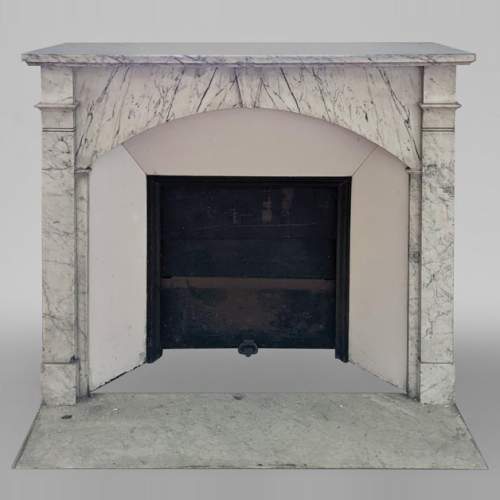
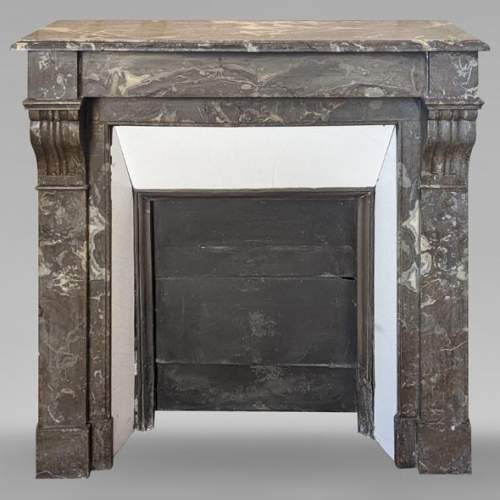
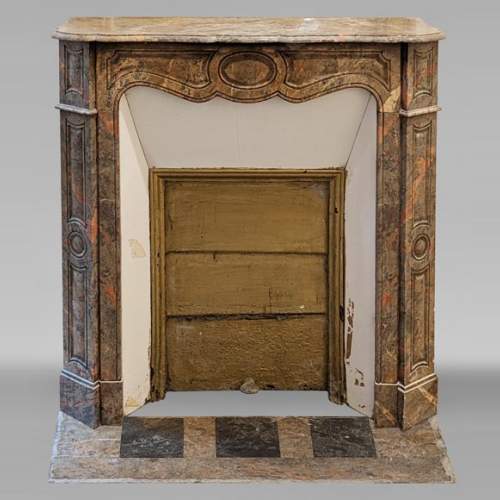
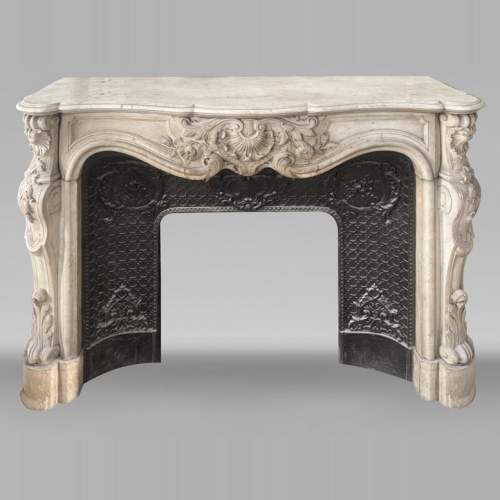
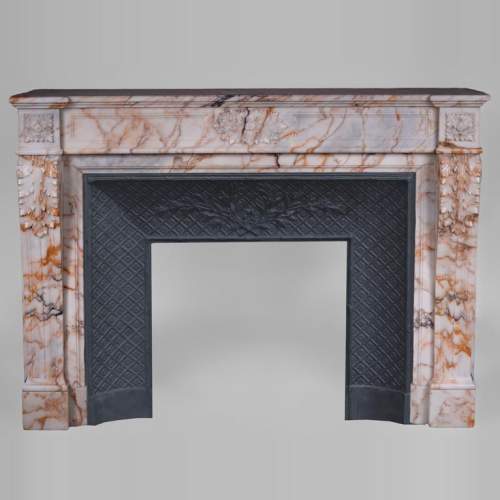
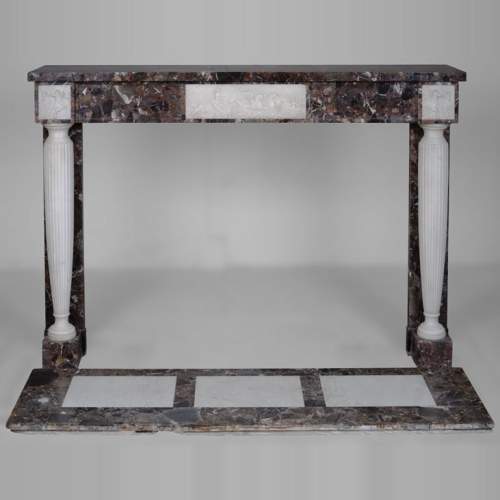
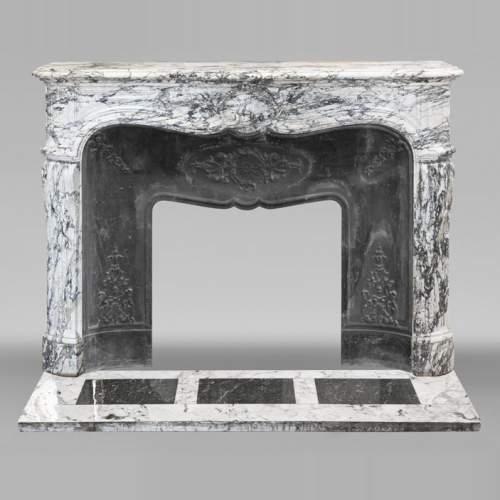
Louis XVI style mantel adorned with interlacing flowers in Sienna Brocatelle.

Dimensions:
Width: 149 cm
Height: 102 cm
Depth: 42 cm
Inner width: 110 cm
Inner height: 70 cm

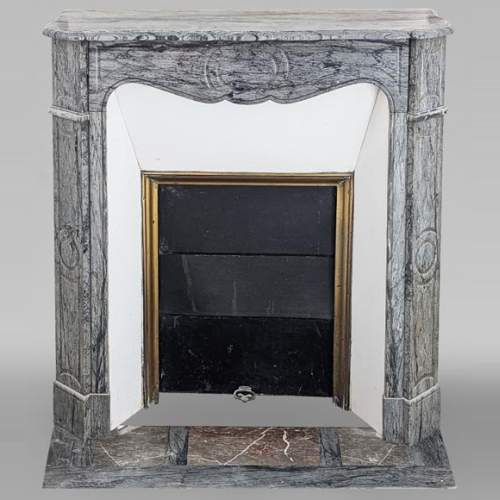
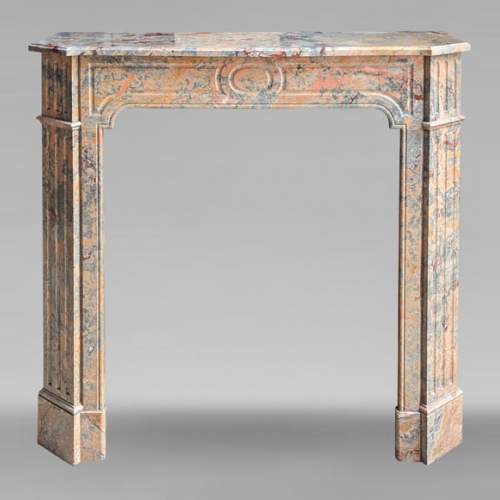
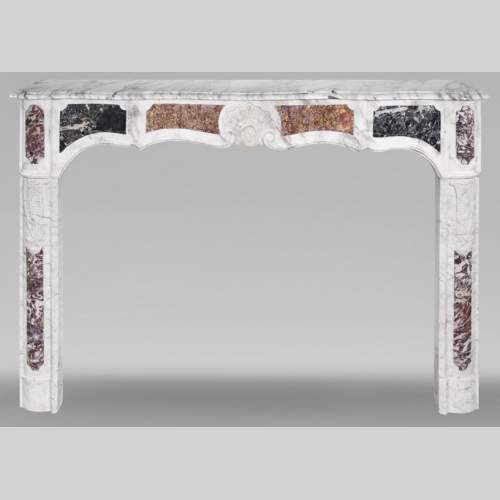
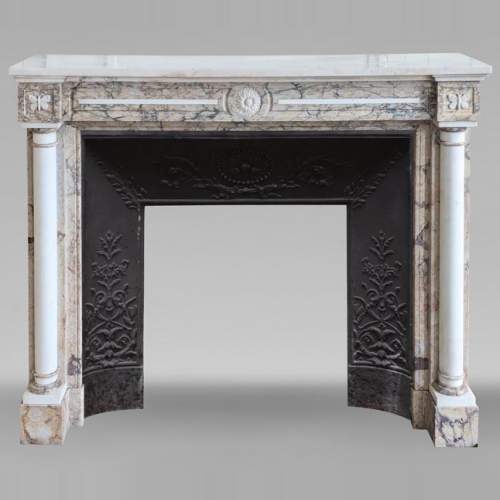
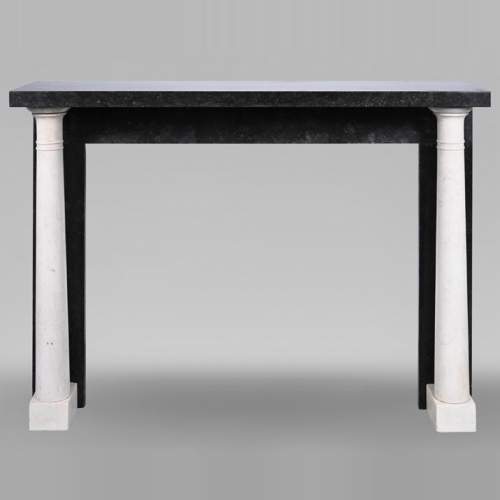
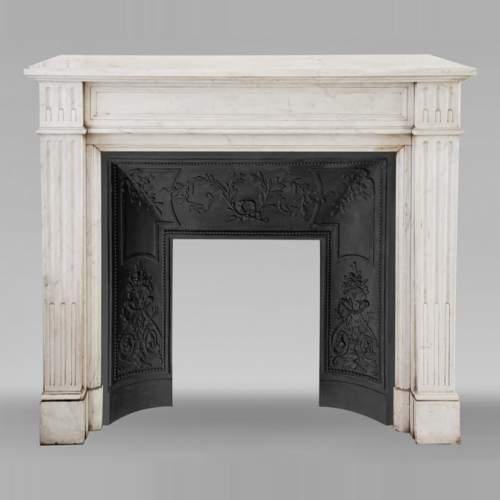
Louis XVI style two-tone mantel carved in Carrara and Turquin marble

Dimensions:
Width: 138 cm
Height: 103 cm
Depth: 32 cm
Inner width: 105 cm
Inner height: 88 cm

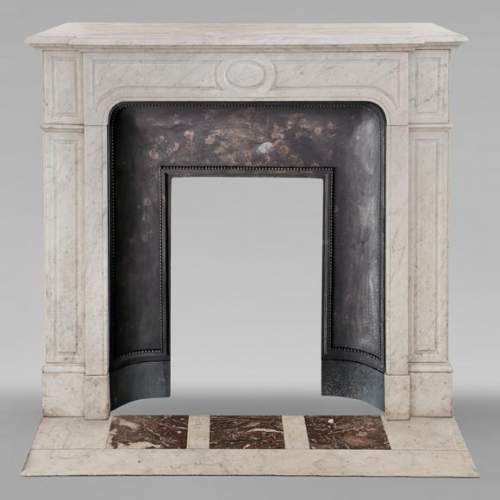
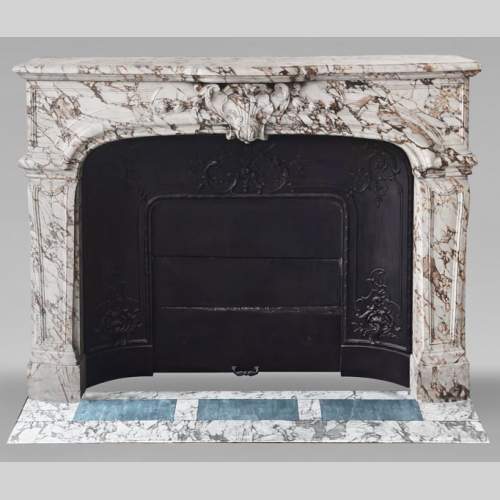
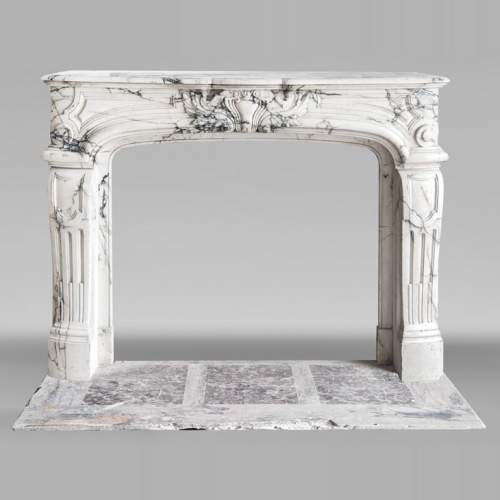
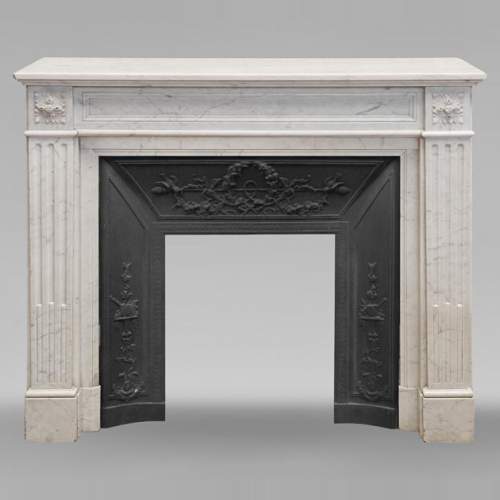
Louis XVI style mantel in Carrara marble adorned with a sunflower flower

Dimensions:
Width: 126 cm
Height: 104 cm
Depth: 32 cm
Inner width: 87 cm
Inner height: 88 cm

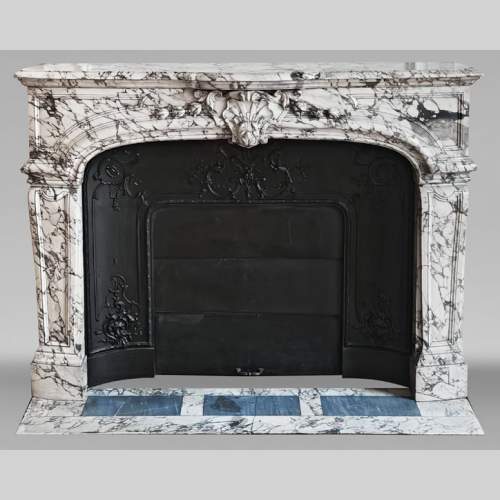
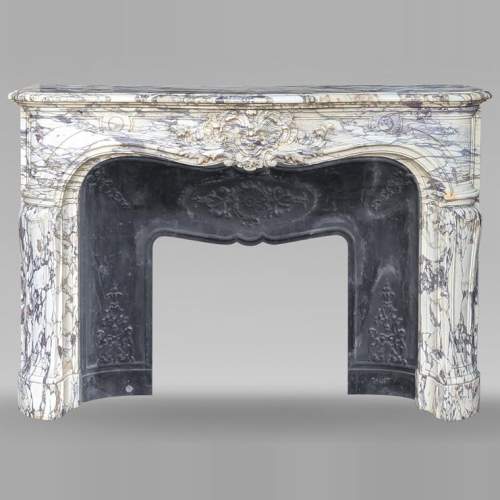
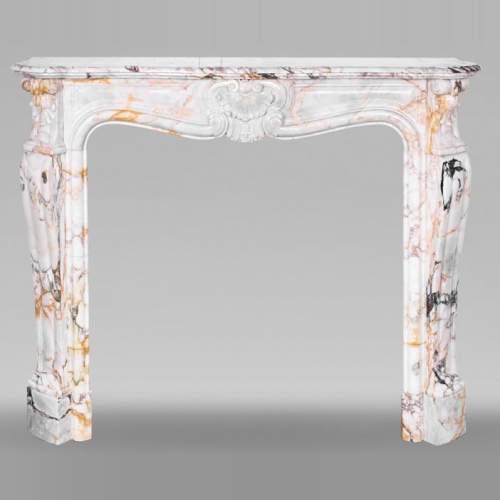
Louis XVI style Carrara marble mantel with floral and sunflower ornaments

Dimensions:
Width: 145 cm
Height: 108 cm
Depth: 40 cm
Inner width: 104 cm
Inner height: 82 cm

Persian-style double-sided clock and garnitures, Charles Stanislas MATIFAT, dated 1851

Ref.15732
Persian-style double-sided clock and garnitures, Charles Stanislas MATIFAT, dated 1851

Charles Stanislas Matifat is the creator of this ensemble consisting of a double-sided enameled bronze clock and a matching pair of large garnitures. Dated 1851 and bearing his signature, the clock was designed for both European tastes and the Ottoman-Persian market. This model was presented in the French section of the 1851 Great Exhibition in London. The MATIFAT display was located at the heart of the Crystal Palace, showcasing Parisian decorative arts of the mid-19th century. The clock features two white enamel dials: one with Roman numerals for European time (Paris or London), and the other on the reverse with Turkish numerals. This dual display made the piece suitable for different cultural time systems. Around this time, MATIFAT developed a vitreous enamel process on bronze, enabling highly refined decoration. The gilded bronze case is richly adorned with polychrome enamel motifs inspired by Persian decorative arts: scrollwork, stylized foliage, rosettes, and interlacing patterns. The openwork base includes enameled escutcheons. The two side garnitures echo the same cloisonné enamel decoration, in tones of green, blue, white, and gold. Their complex architectural shapes and scroll-like handles reflect the orientalist aesthetic popular in the decorative arts of the period. Recognized as one of the most important Parisian art founders of his time, MATIFAT also created decorative objects such as chandeliers, fountains, and vases. He collaborated with major sculptors like Carpeaux and Frémiet, and his work was appreciated by Charles Garnier.

Dimensions:
Width: 31 cm
Height: 66 cm
Depth: 25 cm