


Style Neo-Renaissance / Ref.14286
DECK Théodore (1823-1891), monumental oak mirror with green glazed faience medallions
Dimensions
Width: 68 cm / 26'' ¾
Height: 172 cm / 67'' ¾
This large neo-Renaissance carved oak mirror is decorated with two plaques and three green faience medallions attributed to Théodore Deck (1823–1891). The frame features richly carved decoration consisting of a frieze alternating shells and darts in the same fashion as the collar of the Order of Saint Michael. Finely carved acanthus leaves adorn the top of the frame, forming a pseudo-niche topped with a shell. The frame is inscribed with a verse from The Ballad of the Ladies of Bygone Times by the famous 15th-century poet François Villon.
Each of the scroll-shaped basis is decorated with an faience plaque based on Galeazzo Mondella’s bronze decorative plaques. Deck certainly saw the one depicting Hercules and the Nemean Lion at the Bibliothèque Nationale de France (inv. SdeR.501) and may have seen another depicting Mars and Victory in reproductions (the Metropolitan Museum of Art has a fine example under inventory number 1975.1.1345).
The faience medallions are based on the double-sided medals by the famous Italian Renaissance artist Pisanello. Created to celebrate people or events, they were exchanged and collected. They are inspired by Roman coins, which bare the profile of the ruler on the obverse and an allegory on the reverse. Pisano produced many variations of these medals. It is highly likely that Théodore Deck saw the French National Library’s inv. AV. 33 medal, the reverse of which combines the representation of a young man and an old man, symbolizing the association of power (the strength of youth) and knowledge (the experience of age).
The medallion at the top is a reproduction of the medal by the same Pisanello made in honor of the condottieri Niccolo Piccinino and Braccio da Montone. It depicts a griffin in profile wearing a collar inscribed with “PERVSIA” (Perugia) and nursing two children in a reproduction of the Roman wolf theme. One of these Renaissance medals is also at the BnF (inv. AV 11).
This large mirror is a superb example of the erudition displayed by 19th-century historicist artists, directly referencing Renaissance works they could see in Paris.
Informations
Price: on request
Recommended for you :
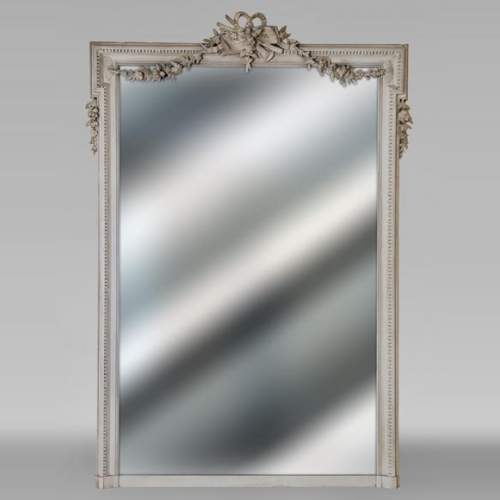
Dimensions:
Width: 112
Height: 166
Depth: 5
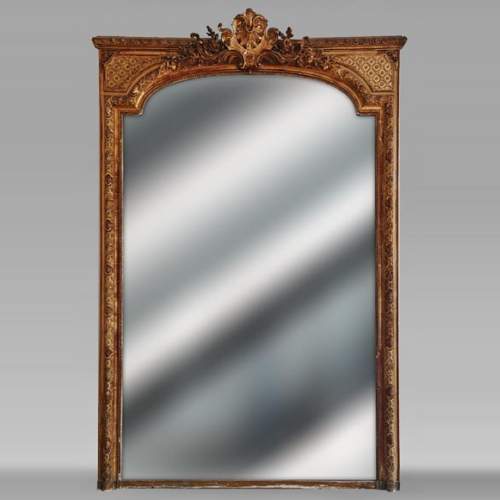
Dimensions:
Width: 144
Height: 215
Depth: 17
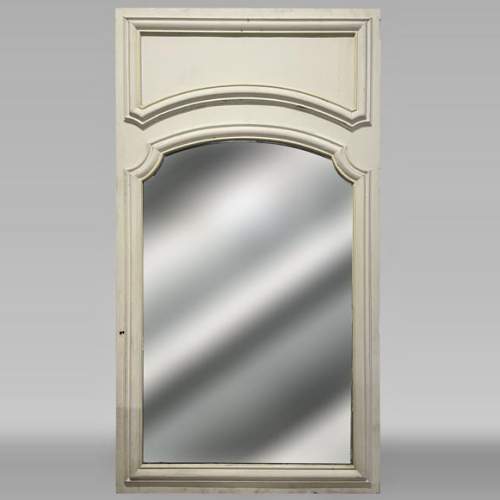
Dimensions:
Width: 111
Height: 203
Depth: 5
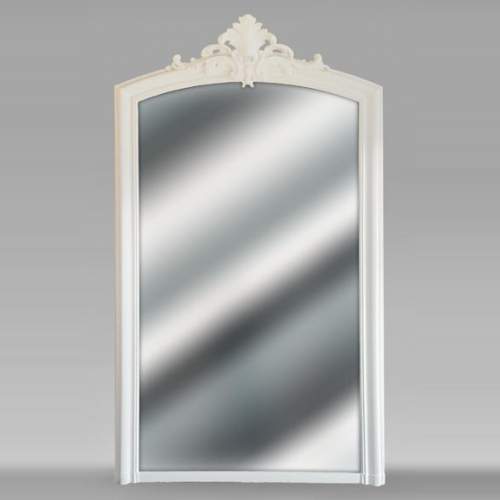
Dimensions:
Width: 111
Height: 190
Depth: 20
Dimensions:
Width: 95
Height: 167
Depth: 15
Dimensions:
Width: 116
Height: 185
Depth: 5
Dimensions:
Width: 130
Height: 162
Depth: 13
Dimensions:
Width: 121
Height: 170
Depth: 5
Dimensions:
Width: 126
Height: 223
Depth: 3
Dimensions:
Width: 123
Height: 228
Depth: 17
Dimensions:
Width: 98
Height: 175
Depth: 4